How to Become an Ethical Hacker: Everything You Need to Start
- Career Amend
- May 2
- 8 min read

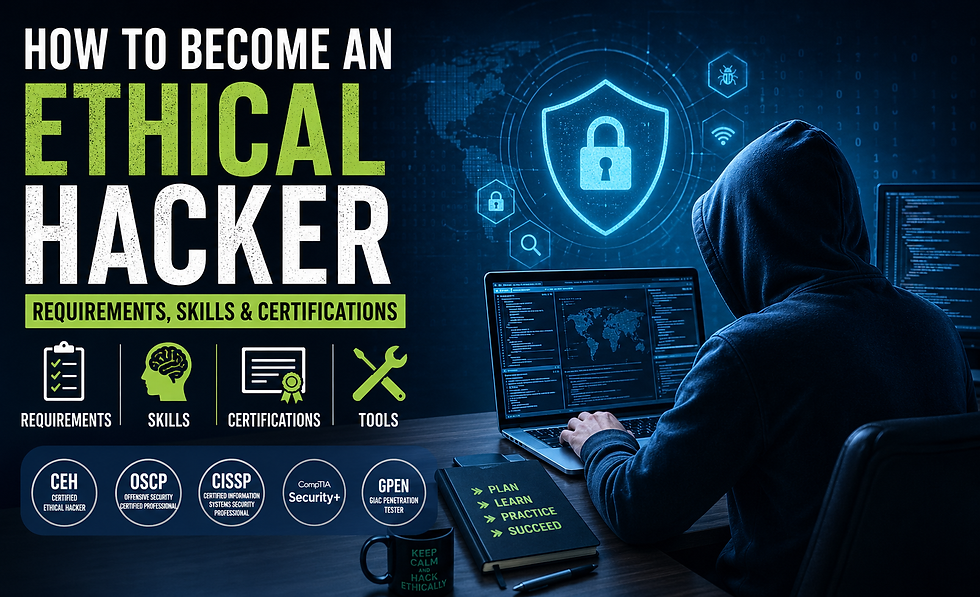
In today’s digital world, cybersecurity has become one of the most critical concerns for businesses and individuals. Ethical hacking plays a vital role in protecting systems, networks, and data from cyber threats. Ethical hackers, also known as white-hat hackers, use their skills to identify vulnerabilities before malicious hackers can exploit them. With increasing cyberattacks worldwide, the demand for skilled ethical hackers is growing rapidly. This guide will help you understand the requirements, skills, and certifications needed to start your journey in ethical hacking.
What is Ethical Hacking?
Ethical hacking refers to the practice of legally testing computer systems, networks, or applications to find security vulnerabilities. Unlike malicious hackers, ethical hackers work with permission and follow strict guidelines. Their goal is to improve security and prevent data breaches. The importance of ethical hacking lies in its ability to protect sensitive information, maintain business continuity, and safeguard user trust. Organizations across industries rely on ethical hackers to ensure their systems are secure from evolving cyber threats.
Who is an Ethical Hacker? Roles and Responsibilities
An ethical hacker is a cybersecurity professional who identifies weaknesses in systems and helps organizations fix them. Their responsibilities include performing penetration testing, analyzing security systems, and reporting vulnerabilities. They simulate cyberattacks to evaluate how well a system can withstand threats. Ethical hackers also stay updated with the latest hacking techniques and security trends. Their role is essential in preventing cybercrime and ensuring that organizations maintain strong security infrastructures.
Why Choose a Career in Ethical Hacking in 2026?
Ethical hacking is one of the most promising career options in 2026 due to the rapid increase in cyber threats. As businesses shift to digital platforms, the need for cybersecurity professionals is at an all-time high. Ethical hackers enjoy competitive salaries, global opportunities, and job security. Additionally, this career offers continuous learning and challenges, making it ideal for tech enthusiasts. With governments and companies investing heavily in cybersecurity, ethical hacking has become a future-proof career path.
Basic Requirements to Become an Ethical Hacker
To start a career in ethical hacking, you need a strong foundation in computer systems and networking. Basic knowledge of operating systems, programming, and cybersecurity concepts is essential. Analytical thinking, problem-solving skills, and attention to detail are also important traits. While formal education can help, many ethical hackers are self-taught through online resources and hands-on practice. A passion for learning and curiosity about how systems work are key requirements for success in this field.
Educational Qualifications Needed
Although there is no strict educational path to becoming an ethical hacker, having a degree in computer science, information technology, or cybersecurity can be beneficial. These programs provide foundational knowledge in programming, networking, and system security. However, many professionals enter this field through certifications and practical experience rather than traditional degrees. Online courses, bootcamps, and self-learning platforms also offer valuable knowledge. Ultimately, skills and hands-on expertise matter more than formal education in ethical hacking.
Essential Technical Skills for Ethical Hackers
Ethical hackers require a diverse set of technical skills to succeed. These include knowledge of networking, programming, operating systems, and cybersecurity tools. Understanding how systems communicate and identifying vulnerabilities are crucial skills. Ethical hackers must also be proficient in penetration testing techniques and vulnerability assessment. Additionally, familiarity with encryption, firewalls, and intrusion detection systems is important. Continuous learning and skill development are essential to stay ahead in the ever-evolving cybersecurity landscape.
Top Programming Languages to Learn
Programming is a fundamental skill for ethical hackers. Languages like Python, JavaScript, C, and Java are widely used in cybersecurity. Python is popular for scripting and automation, while JavaScript helps in understanding web vulnerabilities. C and C++ are useful for understanding low-level system operations and memory management. Learning these languages allows ethical hackers to write scripts, analyze code, and exploit vulnerabilities effectively. Strong programming knowledge enhances problem-solving and hacking capabilities.
Understanding Networking Fundamentals
Networking is the backbone of ethical hacking. A deep understanding of how networks function is essential for identifying vulnerabilities. Ethical hackers must be familiar with concepts such as TCP/IP, DNS, HTTP/HTTPS, and firewalls. Knowledge of network protocols helps in analyzing traffic and detecting potential threats. Understanding how data flows between systems allows hackers to simulate attacks and test defenses. Strong networking fundamentals are critical for anyone aspiring to become an ethical hacker.
Knowledge of Operating Systems
Ethical hackers must be proficient in multiple operating systems, especially Linux, Windows, and macOS. Linux is particularly important because many hacking tools are designed for it. Kali Linux, a popular distribution, is widely used for penetration testing. Understanding how different operating systems work helps ethical hackers identify vulnerabilities and perform security assessments. Familiarity with command-line interfaces and system configurations is also essential for effective hacking and security testing.
Key Cybersecurity Concepts Every Beginner Must Know
To become an ethical hacker, it is important to understand core cybersecurity concepts such as encryption, authentication, firewalls, and intrusion detection systems. Knowledge of malware, phishing, and social engineering attacks is also crucial. Ethical hackers must understand how security systems are designed and how attackers exploit weaknesses. Learning about risk management and security policies helps in building a strong foundation. These concepts form the backbone of ethical hacking and are essential for beginners.
Types of Ethical Hacking
Ethical hacking is a broad field with various specializations. Web application hacking focuses on identifying vulnerabilities in websites, while network hacking involves testing network security. Wireless hacking deals with securing Wi-Fi networks, and system hacking focuses on operating systems. Other types include social engineering and mobile application hacking. Each specialization requires specific skills and tools. Understanding these types helps beginners choose the area that aligns with their interests and career goals.
Step-by-Step Roadmap to Become an Ethical Hacker
Becoming an ethical hacker requires a structured approach. Start by learning the basics of computers, networking, and operating systems. Next, gain knowledge of programming languages like Python and JavaScript. Move on to cybersecurity fundamentals such as encryption and vulnerability assessment. Practice using tools like Kali Linux and Metasploit in safe environments. Earn relevant certifications to validate your skills. Finally, build real-world experience through internships, bug bounty programs, or labs. Consistency and hands-on practice are key to mastering ethical hacking.
Best Certifications for Ethical Hackers
Certifications play a crucial role in establishing credibility in ethical hacking. Popular certifications include Certified Ethical Hacker (CEH), Offensive Security Certified Professional (OSCP), and Certified Information Systems Security Professional (CISSP). CEH is beginner-friendly and widely recognized, while OSCP is more advanced and focuses on practical skills. CISSP is ideal for experienced professionals aiming for leadership roles. These certifications help validate your expertise and increase your chances of landing high-paying cybersecurity jobs.
Top Online Courses & Training Platforms
There are numerous online platforms offering ethical hacking courses for beginners and professionals. Websites like Udemy, Coursera, and edX provide affordable and flexible learning options. Platforms such as TryHackMe and Hack The Box offer hands-on labs and real-world scenarios. These courses cover topics like penetration testing, network security, and vulnerability assessment. Choosing the right course depends on your skill level and career goals. Continuous learning through these platforms helps you stay updated with industry trends.
Tools Used by Ethical Hackers
Ethical hackers use a variety of tools to identify vulnerabilities and test security systems. Kali Linux is a popular operating system that comes pre-installed with many hacking tools. Metasploit is used for penetration testing and exploit development. Wireshark helps in analyzing network traffic, while Nmap is used for network scanning. Other tools like Burp Suite and John the Ripper are also widely used. Mastering these tools is essential for performing effective security assessments.
Building Practical Experience & Hands-On Labs
Practical experience is the most important aspect of becoming an ethical hacker. Setting up a home lab or using online platforms allows you to practice safely. Platforms like TryHackMe and Hack The Box provide real-world scenarios where you can test your skills. Participating in Capture The Flag (CTF) competitions is also highly beneficial. Hands-on practice helps you understand real-world vulnerabilities and improves your problem-solving skills, making you job-ready in the cybersecurity field.
Creating a Strong Ethical Hacker Portfolio
A strong portfolio showcases your skills and practical experience to potential employers. Include details of projects, penetration testing reports, and bug bounty findings. Document your learning journey, tools used, and challenges solved. Having a GitHub profile or personal website adds credibility. A well-structured portfolio demonstrates your expertise and dedication, making you stand out in a competitive job market. It also helps recruiters assess your real-world problem-solving abilities.
Common Challenges Faced by Beginners
Beginners often face challenges such as understanding complex concepts, lack of practical experience, and choosing the right learning path. The vast amount of information available can be overwhelming. Additionally, mastering tools and techniques takes time and patience. Many beginners also struggle with staying consistent. Overcoming these challenges requires dedication, continuous practice, and seeking guidance from online communities or mentors. Persistence is key to succeeding in ethical hacking.
Ethical Hacking Career Opportunities & Job Roles
Ethical hacking offers a wide range of career opportunities across industries. Common job roles include penetration tester, security analyst, cybersecurity consultant, and network security engineer. Organizations in finance, healthcare, IT, and government sectors actively hire ethical hackers. With experience, professionals can move into senior roles such as security architect or chief information security officer (CISO). The demand for skilled ethical hackers continues to grow, making it a lucrative career option.
Salary Expectations for Ethical Hackers in India & Globally
Ethical hackers earn competitive salaries depending on their skills, experience, and certifications. In India, entry-level professionals can earn between ₹4–8 LPA, while experienced hackers can earn ₹15–30 LPA or more. Globally, salaries are even higher, with professionals earning $70,000 to $150,000 annually. Certifications like CEH and OSCP can significantly boost earning potential. As cybersecurity becomes a priority, salary packages in this field continue to rise.
Freelancing & Bug Bounty Hunting Opportunities
Ethical hackers can also explore freelancing and bug bounty programs as alternative career paths. Platforms like HackerOne and Bugcrowd allow hackers to find and report vulnerabilities in exchange for rewards. Freelancing offers flexibility and the opportunity to work with global clients. Bug bounty hunting can be highly rewarding, both financially and professionally. It also helps build reputation and credibility in the cybersecurity community.
Legal and Ethical Considerations in Hacking
Ethical hacking must always be performed within legal boundaries. Unauthorized hacking is illegal and can lead to severe consequences. Ethical hackers must obtain proper permission before testing any system. They should follow guidelines and maintain confidentiality of sensitive data. Understanding laws related to cybersecurity is essential to avoid legal issues. Maintaining ethical standards ensures trust and professionalism in this field.
Tips to Stay Updated in Cybersecurity Industry
The cybersecurity landscape is constantly evolving, making it essential to stay updated. Follow cybersecurity blogs, attend webinars, and participate in online forums. Reading research papers and security reports helps in understanding new threats. Joining communities on platforms like LinkedIn and Reddit can provide valuable insights. Continuous learning and adapting to new technologies are crucial for long-term success in ethical hacking.
Conclusion:
Becoming an ethical hacker is a rewarding journey that requires dedication, curiosity, and continuous learning. By mastering technical skills, gaining practical experience, and earning certifications, you can build a successful career in cybersecurity. The demand for ethical hackers is increasing, offering excellent job opportunities and growth potential. Start your journey today, stay consistent, and keep improving your skills to succeed in this dynamic and exciting field.


Comments