Why Businesses Are Switching to Cloud-Based ERP Systems
- Career Amend
- Jun 6
- 5 min read

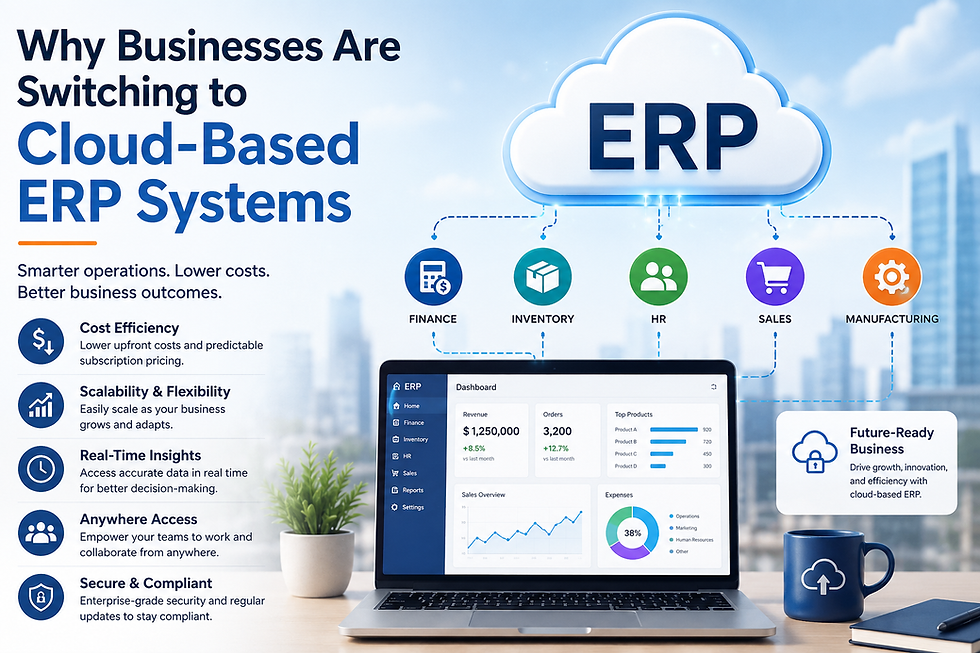
Introduction to Cloud-Based ERP Systems
Businesses today operate in a fast-paced, digital-first environment where efficiency and adaptability are crucial. Cloud-based ERP systems have emerged as a powerful solution to streamline operations, reduce costs, and improve decision-making. Unlike traditional systems, they offer flexibility, scalability, and accessibility, making them an essential tool for modern enterprises aiming to stay competitive in a rapidly evolving marketplace.
What Is a Cloud ERP System?
A cloud ERP system is a software platform hosted on remote servers and accessed through the internet. It integrates core business functions like finance, HR, inventory, and customer management into a unified system. This centralized approach enables real-time data sharing across departments, improving efficiency and collaboration without the need for expensive on-premise infrastructure.
Traditional ERP vs Cloud-Based ERP: Key Differences
Traditional ERP systems require on-site servers, manual updates, and significant upfront investment. In contrast, cloud ERP operates on a subscription model, offering automatic updates and remote access. While traditional systems provide control, cloud ERP excels in flexibility, scalability, and lower maintenance costs, making it more suitable for modern, dynamic businesses.
Why Businesses Are Moving to the Cloud
Businesses are increasingly adopting cloud ERP systems to enhance agility and reduce operational complexities. The ability to access data anytime, anywhere, combined with lower IT overhead, makes cloud solutions highly attractive. Additionally, the demand for digital transformation and remote work capabilities has accelerated the shift toward cloud-based platforms across industries.
Cost Efficiency and Lower Upfront Investment
One of the biggest advantages of cloud ERP is its cost-effectiveness. Businesses can avoid large capital expenditures on hardware and infrastructure. Instead, they pay a predictable subscription fee. This pay-as-you-go model reduces financial risk, allows better budgeting, and enables small and medium enterprises to access advanced ERP features without heavy investment.
Scalability and Flexibility for Growing Businesses
Cloud ERP systems are highly scalable, allowing businesses to easily adjust resources based on their needs. Whether expanding operations, adding users, or entering new markets, companies can scale without major disruptions. This flexibility ensures that the ERP system grows alongside the business, supporting long-term success and adaptability.
Real-Time Data Access and Improved Decision-Making
Cloud ERP provides real-time data visibility across all business functions. Managers and decision-makers can access up-to-date information instantly, enabling faster and more informed decisions. This level of transparency helps identify trends, monitor performance, and respond quickly to market changes, giving businesses a competitive edge.
Enhanced Collaboration Across Teams and Locations
With cloud ERP, teams can collaborate seamlessly regardless of their physical location. Employees can access shared data and work on the same platform simultaneously. This improves communication, reduces errors, and enhances productivity, especially in organizations with multiple branches or remote work environments.
Data Security and Compliance in Cloud ERP
Modern cloud ERP providers invest heavily in advanced security measures such as encryption, multi-factor authentication, and regular audits. These systems also comply with industry regulations, ensuring data protection and privacy. For many businesses, cloud ERP offers better security than traditional systems due to continuous monitoring and updates.
Automatic Updates and Maintenance Benefits
Cloud ERP systems eliminate the need for manual updates and maintenance. Service providers handle software upgrades, bug fixes, and system improvements automatically. This ensures that businesses always have access to the latest features and security enhancements without downtime or additional costs, improving overall efficiency.
Integration with Modern Business Tools and Applications
Cloud ERP systems can easily integrate with other modern tools such as CRM software, e-commerce platforms, and analytics applications. This seamless integration creates a connected ecosystem where data flows smoothly between systems, improving operational efficiency and enabling businesses to leverage advanced technologies.
Remote Accessibility and Work-from-Anywhere Advantage
One of the most significant benefits of cloud ERP is remote accessibility. Employees can log in from any device with an internet connection, making it ideal for remote work and global operations. This flexibility not only boosts productivity but also ensures business continuity during disruptions, such as pandemics or unforeseen events.
Faster Implementation Compared to On-Premise ERP
Cloud ERP systems are quicker to deploy than traditional on-premise solutions. Since there is no need for complex hardware setup or infrastructure installation, businesses can go live in a shorter time. This faster
implementation reduces downtime and allows companies to start benefiting from the system almost immediately.
Customization and Industry-Specific Solutions
Modern cloud ERP platforms offer high levels of customization to meet specific business needs. Many providers also offer industry-specific solutions tailored for sectors like manufacturing, retail, healthcare, and finance. This ensures that businesses get features and functionalities aligned with their operational requirements.
Improved Customer Experience and Service Delivery
Cloud ERP systems enhance customer experience by streamlining operations and improving response times. With access to real-time customer data, businesses can personalize services, manage orders efficiently, and resolve issues faster. This leads to higher customer satisfaction and long-term loyalty.
Business Continuity and Disaster Recovery Advantages
Cloud ERP systems provide robust disaster recovery and backup solutions. Data is stored securely on remote servers with multiple redundancies, ensuring business continuity even during system failures or natural disasters. This reliability minimizes risks and protects critical business information.
Challenges of Adopting Cloud ERP Systems
Despite its advantages, cloud ERP adoption comes with challenges such as data migration complexities, initial learning curves, and dependency on internet connectivity. Businesses must also carefully choose vendors to ensure data security and compliance. Proper planning and training can help overcome these challenges effectively.
How to Choose the Right Cloud ERP Solution
Selecting the right cloud ERP system requires evaluating business needs, budget, scalability, and vendor reputation. Companies should consider factors like ease of use, integration capabilities, customer support, and customization options. Conducting thorough research and trials can help make an informed decision.
Top Cloud ERP Providers in 2026
Several leading providers dominate the cloud ERP market, offering advanced features and reliable services. Popular names include SAP, Oracle, Microsoft Dynamics, and NetSuite. Each platform offers unique benefits, so businesses should compare them based on their specific requirements before making a choice.
Cloud ERP for Small vs Large Businesses
Cloud ERP systems cater to both small and large enterprises. Small businesses benefit from affordability and scalability, while large organizations gain from advanced features and global accessibility. The flexibility of cloud ERP makes it a suitable solution for businesses of all sizes and industries.
Future Trends in Cloud ERP Technology
The future of cloud ERP includes integration with emerging technologies like artificial intelligence, machine learning, and the Internet of Things (IoT). These innovations will enhance automation, predictive analytics, and operational efficiency, making ERP systems smarter and more intuitive.
Case Studies: Businesses Successfully Using Cloud ERP
Many companies have successfully adopted cloud ERP to transform their operations. From improving supply chain management to enhancing customer service, real-world case studies highlight the tangible benefits of cloud ERP systems. These success stories inspire other businesses to embrace digital transformation.
Conclusion:
Cloud ERP systems offer numerous benefits, including cost savings, scalability, and improved efficiency. While challenges exist, the advantages often outweigh the drawbacks. Businesses looking to modernize operations and stay competitive should consider adopting cloud ERP as a strategic investment for long-term growth.


Comments