How to Become an Ethical Hacker: A Simple Guide for Students
- Career Amend
- May 2
- 5 min read

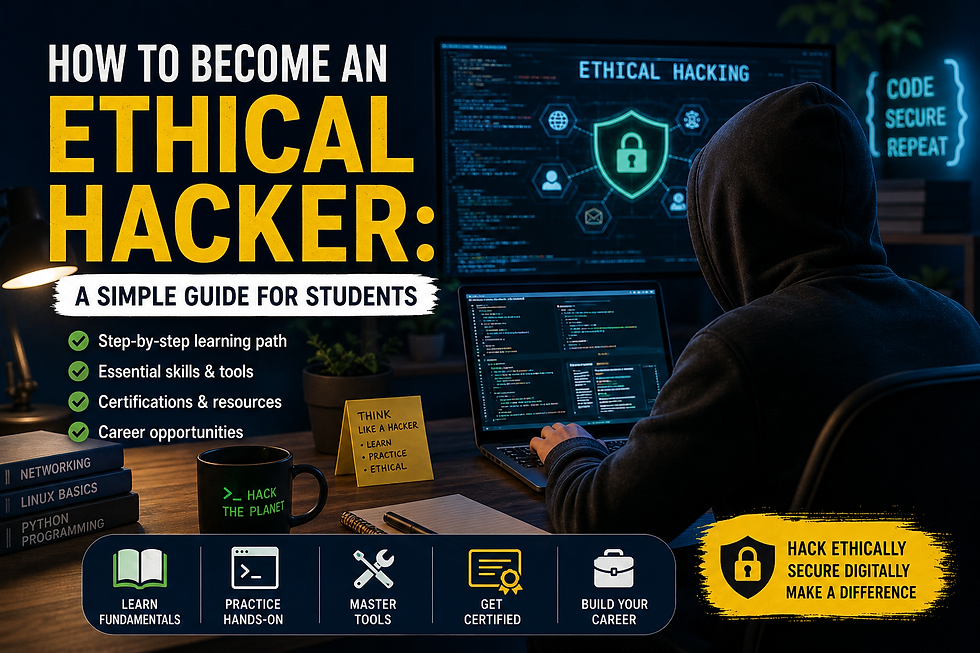
Introduction to Ethical Hacking
Ethical hacking involves legally testing systems to identify security vulnerabilities. With rising cyber threats, organizations rely on ethical hackers to protect sensitive data. For students, this field offers a powerful entry into cybersecurity with high demand, strong salaries, and long-term career growth opportunities worldwide.
Who is an Ethical Hacker?
An ethical hacker is a cybersecurity professional who identifies system weaknesses before malicious hackers exploit them. They follow legal guidelines and use hacking techniques responsibly. Unlike cybercriminals, ethical hackers work with organizations to improve security, prevent attacks, and ensure safe digital environments.
Why Students Should Learn Ethical Hacking
Ethical hacking is a future-proof career with growing demand. Students can start early, build practical skills, and explore global opportunities. It offers high-paying jobs, freelancing options, and bug bounty programs. Learning ethical hacking also strengthens problem-solving, analytical thinking, and technical expertise.
Basic Skills Required to Become an Ethical Hacker
To succeed in ethical hacking, students must develop core technical skills. These include understanding networking concepts, learning programming languages like Python and Java, and gaining knowledge of operating systems such as Linux and Windows. Strong logical thinking and curiosity are equally important.
Educational Requirements for Ethical Hacking
Students can begin ethical hacking after completing basic schooling. While a degree in computer science or IT is helpful, it’s not mandatory. Online courses, certifications, and self-learning play a crucial role. Practical skills and real-world experience often matter more than formal education.
Top Certifications for Ethical Hackers
Certifications validate your cybersecurity skills and improve job prospects. Popular certifications include Certified Ethical Hacker (CEH), CompTIA Security+, and OSCP. These credentials help students stand out, gain credibility, and access better career opportunities in the cybersecurity industry.
Step-by-Step Guide to Start Ethical Hacking
Start with networking basics, then learn Linux operating systems. Next, focus on programming languages and cybersecurity concepts. Practice using ethical hacking tools and platforms. Gradually build projects and participate in real-world simulations to strengthen your practical knowledge and confidence.
Best Tools Every Beginner Ethical Hacker Should Know
Beginners should learn tools like Nmap for network scanning, Wireshark for traffic analysis, and Metasploit for penetration testing. These tools help identify vulnerabilities and test system security. Mastering essential tools is key to becoming a skilled and efficient ethical hacker.
How to Practice Ethical Hacking Safely
Always practice ethical hacking in legal environments such as virtual labs and authorized platforms. Avoid testing real systems without permission. Follow cybersecurity laws and ethical guidelines strictly. Safe practice ensures skill development without legal risks or ethical violations.
Free and Paid Resources for Students
Students can learn ethical hacking through platforms like online courses, YouTube tutorials, and cybersecurity blogs. Paid courses offer structured learning, while free resources provide flexibility. Books, practice labs, and community forums also help in building strong foundational and advanced skills.
Ethical Hacking: A Growing Career for Students
Ethical hacking has become one of the most in-demand skills in today’s digital world. As businesses move online, cybersecurity threats are increasing rapidly. This creates a huge demand for ethical hackers who can secure systems and prevent data breaches.
For students, this is an excellent career choice because it does not always require a traditional degree. With the right skills, certifications, and hands-on practice, anyone can start a career in ethical hacking. Early exposure helps students gain a competitive edge and build expertise over time.
Key Benefits of Learning Ethical Hacking Early
Starting early gives students more time to experiment, learn tools, and understand cybersecurity concepts deeply. Ethical hacking enhances technical knowledge, improves logical reasoning, and builds problem-solving abilities.
Additionally, students can participate in bug bounty programs, where companies pay hackers for finding vulnerabilities. This not only provides real-world experience but also helps in earning money while learning.
Important Technical Skills Explained
Ethical hacking requires a strong understanding of networking. Students should learn concepts like IP addresses, DNS, firewalls, and protocols such as HTTP and TCP/IP. These basics form the foundation of cybersecurity.
Programming is another essential skill. Languages like Python are widely used for automation and scripting. Java and C++ help in understanding system-level programming. Knowledge of Linux is also critical, as most hacking tools are designed for Linux environments.
Role of Certifications in Career Growth
Certifications play a crucial role in validating your skills. They act as proof of your knowledge and help employers trust your abilities. For beginners, certifications like CEH and CompTIA Security+ are ideal starting points.
Advanced certifications like OSCP focus on practical skills and real-world scenarios. These certifications not only improve job prospects but also increase earning potential in the cybersecurity field.
Practical Learning Approach
Ethical hacking is a skill-based field, which means practical learning is essential. Students should focus on hands-on practice rather than just theory. Setting up a home lab, using virtual machines, and practicing on platforms like TryHackMe or Hack The Box can significantly improve skills.
Real-world practice helps students understand how cyber attacks happen and how to prevent them effectively. This practical exposure is what makes a successful ethical hacker.
Understanding Ethical and Legal Boundaries
One of the most important aspects of ethical hacking is following legal guidelines. Students must understand that hacking without permission is illegal and punishable by law.
Ethical hackers always work within authorized environments. They follow strict rules and ensure their actions do not harm systems or data. Learning ethics is just as important as learning technical skills in this field.
Best Learning Resources Strategy
A combination of free and paid resources works best for students. Free platforms like YouTube and blogs provide basic knowledge, while paid courses offer structured learning paths.
Books written by cybersecurity experts help in understanding concepts deeply. Online communities and forums allow students to interact, ask questions, and stay updated with the latest trends in ethical hacking.
Common Challenges Faced by Beginners
Beginners often struggle with complex concepts, tool overload, and lack of direction. Understanding networking, Linux, and security fundamentals can feel overwhelming. Consistency and structured learning are key. Avoid jumping between topics and focus on building a strong foundation step by step.
Tips to Become a Successful Ethical Hacker
Focus on hands-on practice, stay updated with cybersecurity trends, and build real-world projects. Join online communities, participate in bug bounty programs, and keep learning continuously. Developing problem-solving skills and maintaining ethical standards are essential for long-term success.
Ethical Hacking Career Paths
Ethical hacking offers diverse career roles. Students can become penetration testers, security analysts, or bug bounty hunters. Other roles include cybersecurity consultants and network security engineers. Each path requires specific skills but offers excellent growth opportunities in the cybersecurity industry.
Salary and Job Opportunities in Ethical Hacking
Ethical hackers enjoy competitive salaries globally. Entry-level professionals can earn attractive packages, while experienced experts earn significantly more. Top companies actively hire cybersecurity professionals, making this field one of the most lucrative and stable career options for students.
Future Trends in Ethical Hacking
The future of ethical hacking is driven by AI, cloud security, and IoT protection. As cyber threats evolve, demand for skilled ethical hackers will continue to grow. Automation tools and advanced technologies are shaping the next generation of cybersecurity professionals.
Mistakes to Avoid While Learning Ethical Hacking
Avoid skipping basics, ignoring legal guidelines, and relying only on theory. Many beginners try advanced tools too early. Focus on fundamentals, practice regularly, and follow ethical standards. Consistency and patience are critical to mastering ethical hacking skills.
Conclusion
Ethical hacking is a high-demand, future-proof career for students. With the right skills, certifications, and practical experience, anyone can succeed in cybersecurity. Start early, stay consistent, and focus on ethical practices to build a successful career as an ethical hacker.


Comments