Benefits of Doing a Post Graduation in Data Science
- Career Amend
- Mar 27
- 5 min read

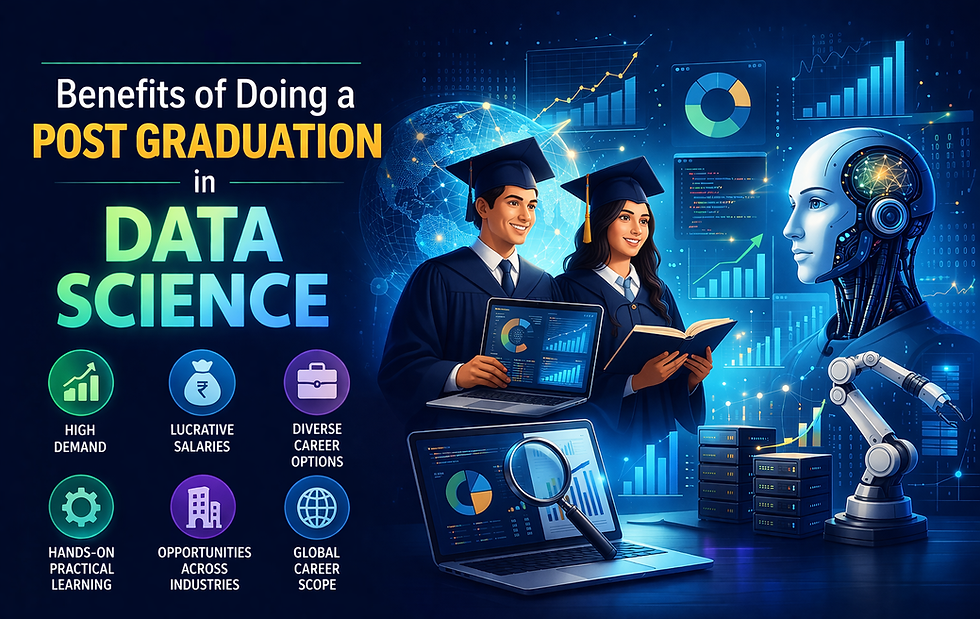
In today’s digital era, data is often referred to as the “new oil.” Every organization, from startups to multinational corporations, relies on data to make informed decisions. This has led to the rapid growth of data science, one of the most in-demand fields globally.
Data science combines statistics, programming, and domain knowledge to extract meaningful insights from raw data. With the rise of technologies like artificial intelligence (AI), machine learning (ML), and big data, the demand for skilled data professionals has skyrocketed.
As businesses increasingly depend on data-driven strategies, pursuing a Post Graduation in Data Science has become a smart and future-proof career choice.
What is a Post Graduation in Data Science?
A Post Graduation in Data Science is an advanced academic program designed to equip students with specialized knowledge in data analysis, machine learning, data visualization, and predictive modeling.
This program typically covers:
Python and R programming
Statistical analysis
Machine learning algorithms
Big data technologies (Hadoop, Spark)
Data visualization tools (Tableau, Power BI)
Artificial Intelligence concepts
The course focuses on both theoretical understanding and practical application, ensuring students are industry-ready by the time they graduate.
]
Why Choose Data Science as a Career?
Choosing data science as a career offers unmatched advantages in today’s job market. The world is generating massive amounts of data every second, and companies need experts to interpret and utilize this data effectively.
Here’s why data science is a great career option:
Growing demand across industries
High-paying job roles
Opportunities to work on real-world problems
Continuous learning and innovation
Flexibility to work in different domains
From healthcare and finance to e-commerce and entertainment, data science professionals play a crucial role in shaping business strategies.
Top Benefits of Doing a Post Graduation in Data Science
1.1 High Demand for Data Science Professionals
One of the biggest advantages of pursuing a postgraduate degree in data science is the high demand for skilled professionals. Companies are actively seeking individuals who can analyze complex datasets and derive actionable insights.
Job roles like Data Analyst, Data Scientist, Machine Learning Engineer, and Business Intelligence Analyst are in high demand globally.
1.2 Lucrative Salary Packages
Data science is known for offering some of the highest-paying jobs in the tech industry. Professionals with advanced qualifications often receive better salary packages compared to those with only undergraduate degrees.
In India, entry-level data scientists can earn competitive salaries, while experienced professionals can earn significantly higher, especially in top tech companies.
1.3 Diverse Career Opportunities
A Post Graduation in Data Science opens doors to multiple career paths, such as:
Data Scientist
Data Analyst
Machine Learning Engineer
AI Specialist
Business Analyst
This diversity allows professionals to choose roles that match their interests and skills.
1.4 Strong Industry Relevance
Data science is not limited to a single industry. It is widely used in:
Healthcare (predicting diseases)
Finance (fraud detection)
Retail (customer behavior analysis)
Marketing (targeted campaigns)
Technology (AI development)
This makes the field highly relevant and adaptable across various sectors.
1.5 Hands-on Learning and Practical Skills
Most postgraduate programs emphasize practical learning through:
Real-world projects
Case studies
Internships
Capstone projects
This hands-on experience helps students build a strong portfolio, making them job-ready.
1.6 Opportunities in Multiple Industries
Data science professionals are needed in almost every industry. Whether it’s banking, healthcare, e-commerce, or entertainment, data plays a critical role in decision-making.
This means graduates are not restricted to one sector and can explore various industries based on their interests.
1.7 Career Growth and Job Security
With the increasing reliance on data, the need for skilled professionals will continue to grow. This ensures:
Strong job security
Continuous career growth
Opportunities for promotions and leadership roles
A postgraduate degree further enhances your credibility and career prospects.
1.8 Global Career Opportunities
Data science skills are globally recognized, allowing professionals to work with international companies or even relocate abroad.
Countries like the USA, Canada, UK, and Germany offer excellent opportunities for data science professionals with advanced qualifications.
Skills You Gain from a Post Graduation in Data Science
A postgraduate program helps you develop a wide range of technical and analytical skills, including:
Programming skills (Python, R)
Data analysis and interpretation
Machine learning techniques
Data visualization
Statistical modeling
Problem-solving and critical thinking
These skills are highly valuable and transferable across industries.
Career Options After Post Graduation in Data Science
After completing your post graduation, you can explore various career roles such as:
Data Scientist – Analyzes complex data to generate insights
Data Analyst – Interprets data and creates reports
Machine Learning Engineer – Builds predictive models
Business Intelligence Analyst – Helps businesses make strategic decisions
AI Engineer – Develops intelligent systems
Each role offers unique challenges and growth opportunities.
Top Industries Hiring Data Science Graduates
Data science professionals are in demand across multiple industries, including:
Information Technology (IT)
Banking and Finance
Healthcare
E-commerce
Telecommunications
Media and Entertainment
Companies rely on data to optimize operations, improve customer experience, and drive innovation.
Is a Post Graduation in Data Science Worth It?
Yes, pursuing a Post Graduation in Data Science is definitely worth it, especially if you are aiming for a high-growth and high-paying career.
The benefits include:
Better job opportunities
Higher earning potential
Advanced skill development
Competitive advantage in the job market
While the course requires dedication and effort, the long-term rewards make it a valuable investment.
How to Choose the Right Data Science Program
Selecting the right program is crucial for your success. Consider the following factors:
Course curriculum and subjects covered
Faculty expertise
Industry partnerships
Internship opportunities
Placement support
Mode of learning (online/offline)
Make sure the program aligns with your career goals and provides practical exposure.
Conclusion:
In a world driven by data, pursuing a Post Graduation in Data Science is one of the smartest career decisions you can make. It not only equips you with in-demand skills but also opens doors to high-paying and rewarding job opportunities.
From strong career growth and global opportunities to diverse roles and industry relevance, the benefits are immense. If you are passionate about technology, analytics, and problem-solving, this field offers endless possibilities.
Investing in a postgraduate degree in data science can truly transform your career and set you on the path to success in the digital age.
Read More:
FAQs About Post Graduation in Data Science
Q1. Who should pursue a Post Graduation in Data Science?
Anyone with an interest in data analysis, programming, and problem-solving can pursue this course. It is especially suitable for graduates in IT, Computer Science, Mathematics, Statistics, or Engineering.
Q2. Is coding mandatory for data science?
Yes, basic knowledge of programming languages like Python or R is essential, but it can be learned during the course.
Q3. What is the duration of a data science postgraduate program?
Typically, it ranges from 1 to 2 years depending on the institution and course format.
Q4. Can non-technical students pursue data science?
Yes, many programs offer foundational modules to help beginners build technical skills.
Q5. What are the job prospects after completing the course?
Graduates can work as Data Scientists, Analysts, ML Engineers, and more across various industries.


Comments